

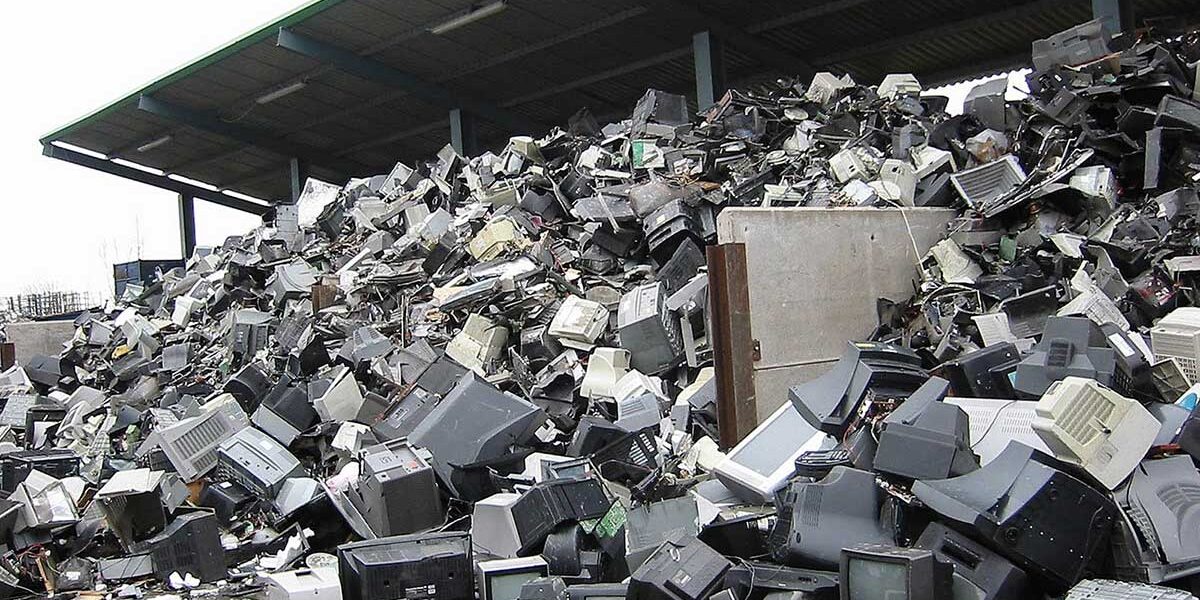
Clearing a house, garage or business premises often means getting rid of old electrical items at the same time as general waste. You might have an old television, microwave, computer, fridge or broken power tool that seems perfect for throwing into the skip.
However, waste electrical and electronic equipment (WEEE) needs to be handled separately from general waste. Some electrical equipment also contains components or materials that require specialist handling.
So before putting an electrical item into your A2B Skip Hire skip, check with us first. In many cases, there will be a more appropriate recycling route available.
What is WEEE waste?
WEEE stands for Waste Electrical and Electronic Equipment. In simple terms, it covers a huge range of products that need electricity, batteries or electrical components to perform their intended function.
Common household examples include:
- Fridges and freezers
- Washing machines and tumble dryers
- Televisions and monitors
- Computers, laptops and printers
- Microwaves and other kitchen appliances
- Vacuum cleaners
- Hairdryers and other small appliances
- Power tools
- Games consoles and electronic toys
- Lighting and certain lamps
The UK’s WEEE Regulations are designed to increase the recovery, reuse and recycling of electrical equipment rather than allowing these materials to be unnecessarily disposed of.
Can I put electrical items in my skip?
Don’t assume that an electrical item can go into a general skip. WEEE requires separate handling, and certain electrical products can contain hazardous components or materials.
This is particularly important for items such as fridges, freezers, televisions, monitors, batteries and some lighting products.
If you’re hiring a skip from A2B and have electrical equipment to dispose of, speak to us before putting it in the skip. We can tell you whether we can accept the particular item and advise you on the appropriate disposal route if we can’t.
Look for the crossed-out wheelie bin symbol
You may have noticed a crossed-out wheelie bin symbol on electrical products. This indicates that the item should not be disposed of with ordinary household waste.
The symbol helps remind consumers that electrical equipment should be collected separately so that reusable materials can be recovered and potentially harmful components can be treated correctly.
What should I do with unwanted electrical equipment?
There are several ways to dispose of unwanted electrical items responsibly.
- Ask the retailer. If you’re replacing an electrical product, check whether the retailer offers a take-back service.
- Use an appropriate recycling facility. Local household waste recycling facilities may have dedicated areas for different types of electrical equipment.
- Check your local council’s collection services. Depending on where you live, separate collections may be available for small electrical items or bulky appliances.
- Consider reuse. If an appliance still works, donating, selling or passing it on may be better than treating it as waste.
- Ask A2B. If you’re already arranging skip hire or a clearance with us, tell us about any electrical items beforehand and we’ll advise you on the best option.
Retailers have responsibilities for electrical waste too
The rules don’t place all the responsibility on the person getting rid of an appliance. Retailers and distributors of electrical equipment also have WEEE responsibilities.
Depending on the circumstances, retailers may be required to provide free take-back for old electrical equipment when supplying an equivalent new product. Larger electrical retailers also have additional obligations relating to the collection of small electrical items.
This means that if you’re replacing a washing machine, television or another electrical appliance, it’s worth checking the retailer’s recycling options before arranging separate disposal.
Why does WEEE need to be recycled separately?
Electrical products can contain valuable materials including metals, plastics and electronic components that can potentially be recovered and recycled.
At the same time, some electrical products contain components that shouldn’t enter the normal mixed waste stream. Keeping WEEE separate allows specialist facilities to recover useful materials while treating other components appropriately.
Clearing a House or Renovating?
If you’re planning a house clearance, renovation or major clear-out in Wirral, it’s worth separating your waste before the skip arrives.
Keep electrical equipment, batteries and anything you’re unsure about to one side rather than automatically throwing everything into the skip. The same applies to other restricted waste such as asbestos, chemicals, gas cylinders and certain hazardous materials.
Doing this before you start filling the skip can save considerable hassle later.
Not Sure What Can Go in Your Skip?
If you’re unsure whether something can be placed in one of our skips, ask us before loading it.
A2B Skip Hire provides skip hire throughout Wirral and surrounding areas for domestic, commercial and construction waste. Our team can advise you on suitable skip sizes, restricted materials and the appropriate way to deal with waste that requires specialist disposal.